
Issue #8 - The Wisdom of the Slow Mile
There’s a specific kind of humility that comes with being hit by a car mid-jog. It wasn’t dramatic, but it was jarring—mostly the result of a driver deciding my personal space was optional. Between that incident, knee tendinitis, and a few spectacular falls, my running career has mostly been a lesson in survival.
For years, I believed that if I wasn’t running at my absolute limit, I wasn’t really running. A “quick 15-minute jog” meant a sprint that left my muscles screaming. I was obsessed with tempo, unaware that my all-out pace was what kept me sidelined. I was moving faster, but I wasn’t listening to my body.
When I first heard the phrase “run slow to run fast,” I dismissed it as nonsense. But training for the NYC Half has forced me to take that paradox seriously. This cycle has been slower than I imagined—more intentional, more cautious, and less about proving something. These miles don’t look impressive on my GPS watch, but they’re preparing my body for a distance I used to think was out of reach. I finally realized that the wisdom I had been resisting was what made progress possible.
This realization echoed a much harder season last year when I was forced to slow down in ways I didn’t choose. It began with shingles, followed by a running-related fall, and then a complicated wrist surgery in the summer. Suddenly, I became painfully aware of my body’s fragility. Simple tasks like turning a doorknob or lifting a coffee mug were difficult. Recovery felt slow, and I felt stuck.
But physical therapy became its own version of a “slow mile”—steady, repetitive, and quietly transformative. Those months stripped away my assumption that progress should be quick or predictable. It was there I learned that weakness isn’t failure.
In those moments, prayer became less about a quick fix and more about being in His presence. When my strength ran out, God’s did not. I realized God wasn’t waiting for me to catch up to Him; He was meeting me exactly where I was, in my frustrations and limitations. He reminded me that I was never moving alone, even when progress felt barely noticeable. Strength didn’t return instantly, but it came gradually, one ordinary step at a time.
We often imagine encountering God in dramatic, unmistakable moments—our own Road to Damascus experience like the apostle Paul (Acts 9) where everything changes at once. And while God can meet us that way, Jesus often meets us in our steady obedience of the everyday, in the choice to take the next faithful step when nothing feels miraculous.
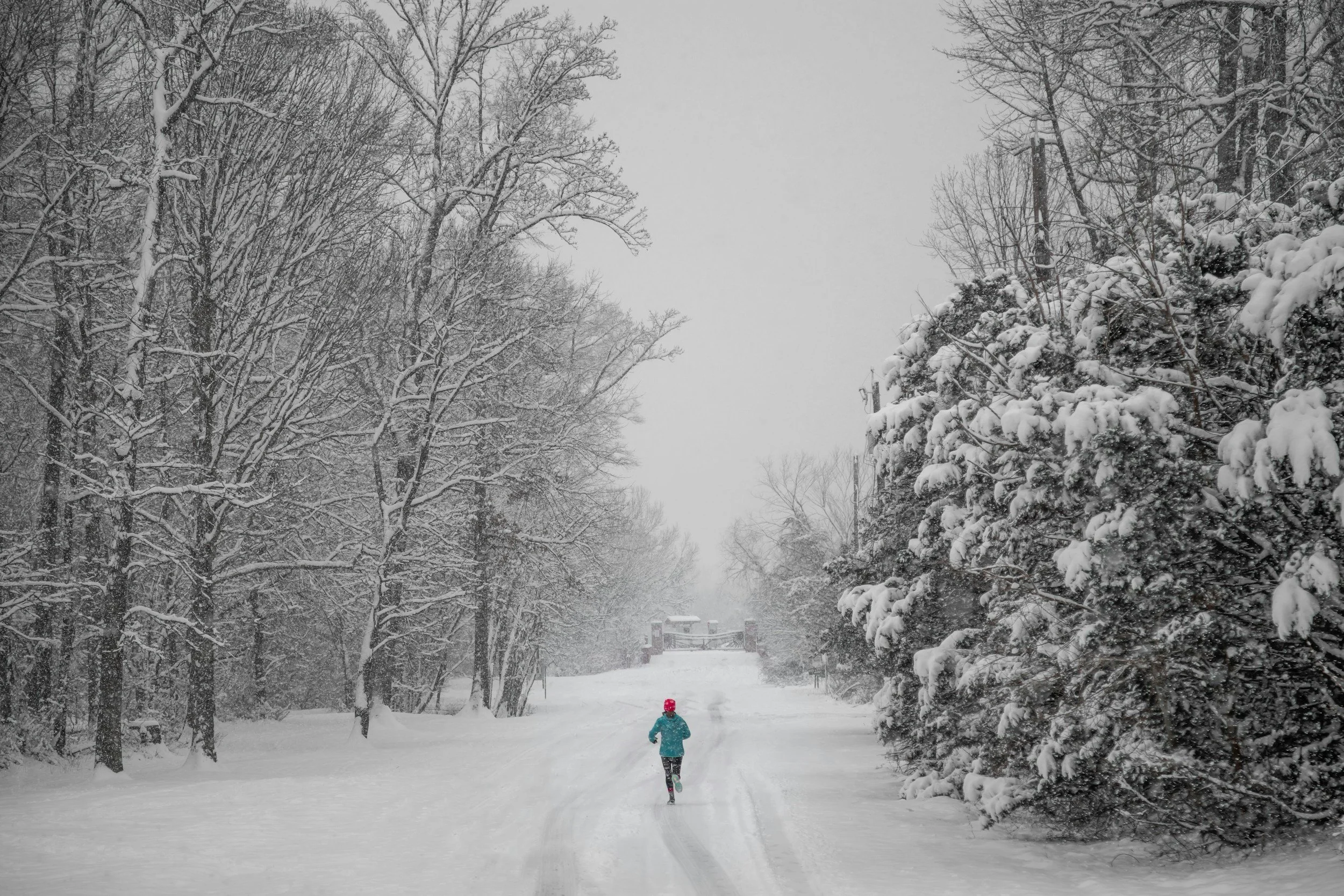
Now, as someone who once thought a 5K was my ceiling, training for 13.1 miles feels surreal. I’m still not a “fast” runner, but I’ve learned to enjoy the process. Whether or not I cross the finish line next month—though running in 20-degree weather and slushy snow should earn me a medal by default—the training has taught me that strength can be rebuilt and growth doesn’t have to be fast to be real.
As our church focuses on being “Rooted and Ready,” I’m seeing how much preparation happens beneath the surface. A tree doesn’t choose when a storm hits, but it stands because its roots are deep (Psalm 1). Time in Scripture that feels routine, prayers that feel repetitive, and faithfulness that goes unnoticed—the kind of growth that doesn’t show up on a spiritual GPS—are the slow miles of faith where we learn to walk with Him.
My encouragement to us is simple: Don’t despise the slow work. Keep showing up. Trust that God is using those quiet, unseen miles to prepare us. Because when the time comes to run, we’ll be ready because we stayed rooted in Him.
-Eliza